Reliable Medical Logistics for Endoscopy Sterilization in Greater Boston Area
In the world of modern medicine, we often focus on "heroics" the groundbreaking surgery, the life-saving diagnosis, or the miracle drug. But behind every successful procedure at a world-class facility like Massachusetts General Hospital or Brigham and Women’s, there is a silent, high-stakes relay race happening on the roads of the Commonwealth.
This is the story of the "Sterile Circuit" the vital logistical loop that moves highly sensitive endoscopy equipment between digestive health centers and sterilization facilities. In an era where a single delayed instrument can cost a hospital thousands of dollars and jeopardize patient safety, the "white-glove medical courier" has become the most important infrastructure you’ve never seen.
Executive Summary: The High-Stakes World of Medical Logistics
For those managing the supply chains of Massachusetts; elite healthcare systems, the challenge is simple but brutal: How do you move a $50,000 piece of glass and fiber optics through Boston traffic without breaking the sterile seal or the instrument itself?
Standard delivery services the "hub and spoke" giants are designed for volume. They are built to move millions of packages through massive sorting centers. But an endoscope is not a package. It is a biological asset. It is a time-sensitive tool that, if handled incorrectly, becomes a liability.
Key Takeaways for Healthcare Executives:
-
The Cost of Failure: A canceled endoscopy procedure due to equipment delays can cost a facility upwards of $2,000 to $5,000 per room, per hour.
-
The Regulatory Imperative: Transporting "dirty" (used) scopes is a regulated biohazard activity requiring specific DOT and OSHA compliance.
-
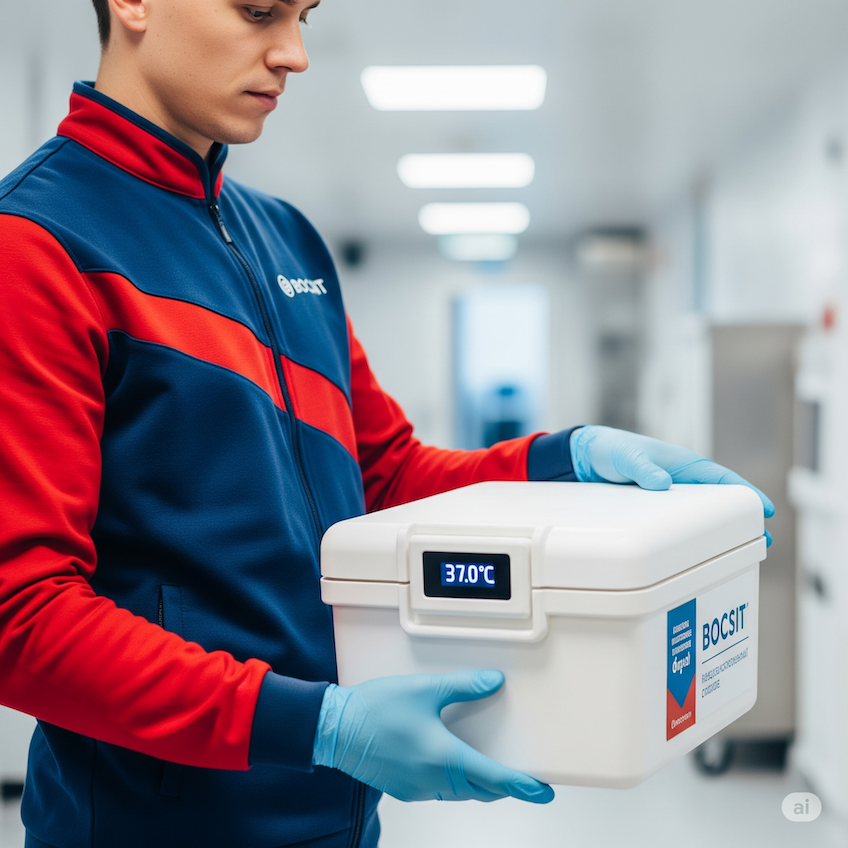
The Specialized Advantage: Dedicated medical courier services provide climate control, vibration-dampening racks, and a single-person chain of custody that standard carriers cannot match.
1. The Endoscopy Reprocessing Cycle: A Race Against the Clock
To understand why a specialized courier is necessary, one must understand the lifecycle of an endoscope. Unlike a scalpel, which might be single-use or easily autoclaved, an endoscope is a complex, multi-part instrument that requires High-Level Disinfection (HLD) or specialized sterilization.
-
Point-of-Use Treatment: Immediately after a procedure, the scope is pre-cleaned at the bedside to prevent bioburden from drying.
-
Biohazard Transport: The "dirty" scope is placed in a leak-proof, labeled container and transported to a sterilization facility.
-
Reprocessing: At the sterilization facility, the scope undergoes a rigorous, validated cleaning process using an Automated Endoscope Reprocessor (AER).
-
Sterile Storage/Transport: Once validated as clean, the scope must be returned to the hospital in an aseptic environment.
-
Ready for Patient: The scope arrives back at the digestive health center, ready for the next life-saving visualization.
In Massachusetts, this cycle is repeated thousands of times a day. If the transport step—the "moving" part—is slow or unprofessional, the entire cycle collapses.
2. Why "General" Couriers Fail the Medical Test
Many facilities attempt to save money by using standard courier services or internal general-purpose vans. This is often a "penny wise, pound foolish" strategy.
-
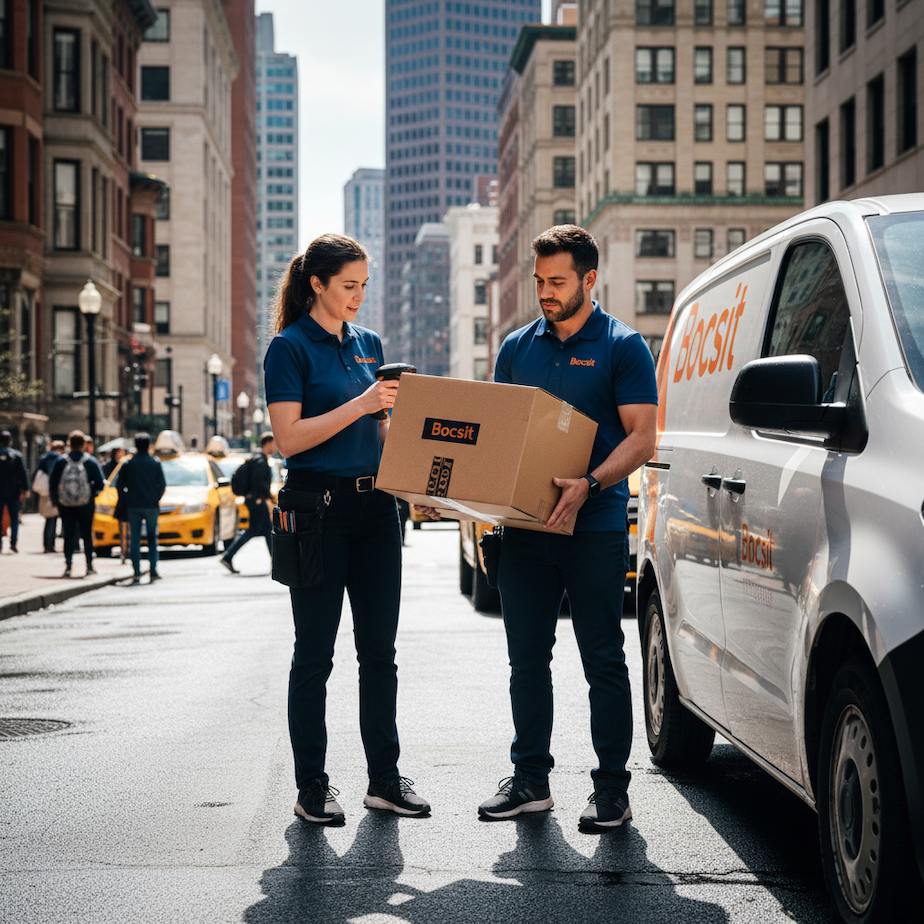
The "Hub-and-Spoke" Trap: Standard couriers move your equipment to a central hub, where it is sorted alongside hundreds of other items. For an endoscope, every minute spent in a sorting facility is a minute it isn't in a procedure room. Specialized medical courier services use Point-to-Point logistics. The driver picks up at the hospital and goes directly to the sterilization facility. No stops. No hubs. No delays.
-
The Fragility Factor: An endoscope’s internal fiber optics are thinner than a human hair. Traditional delivery vans, which lack medical-grade suspension, subject these instruments to "micro-trauma" with every pothole on Commonwealth Avenue. Over time, this leads to costly repairs and premature equipment failure.
-
The Climate Crisis: Massachusetts weather is unpredictable. An endoscope left in the back of an unconditioned van in August can reach temperatures that degrade its internal adhesives. In January, the cold can make components brittle. Only a climate-controlled medical vehicle ensures the instrument remains within its manufacturer-validated temperature range.
3. Navigating the Massachusetts Maze: A Regional Deep Dive
Logistics in Massachusetts is a science of local knowledge. From the high-density clinical hubs of Boston to the sprawling regional centers in Worcester and Springfield, geography dictates strategy.
-
The Boston "Longwood" Bottleneck: The Longwood Medical Area (LMA) is one of the most logistically challenged environments in the world. With thousands of patients, students, and clinicians converging on a few square blocks, traffic is a permanent resident. A specialized medical courier doesn't just use GPS; they use logistical intelligence. They know that a delivery to Beth Israel or the Brigham requires specific service-entrance knowledge and a driver who is pre-cleared for hospital security.
-
The North Shore and I-95 Corridor: As sterilization facilities move further out to Peabody, Danvers, or Woburn to escape the high rents of the city, the "bridge" between the hospital and the sterilizer gets longer. This makes Real-Time Tracking essential. Healthcare managers need to see exactly where their "dirty" load is on I-95 to accurately schedule the next morning's procedures.
4. Safety First: The Regulatory Side of the Drive
-
Biohazard Transport (DOT & OSHA): A used endoscope is a biohazard. Federal and state laws (including 105 CMR 480.000) dictate how this "infectious waste" must be labeled, packaged, and transported. Specialized medical courier services use leak-proof secondary containment and vehicles equipped with spill kits and bio-safety protocols.
-
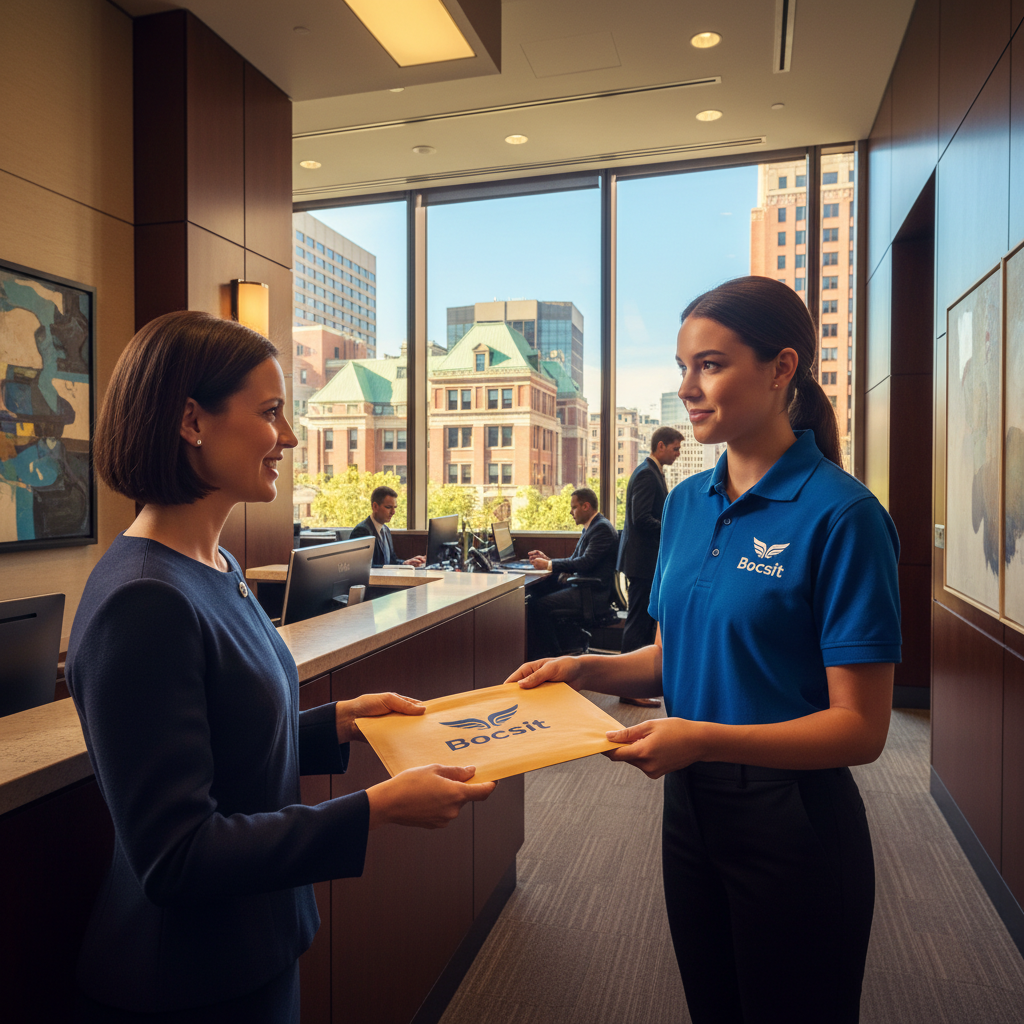
HIPAA and Data Privacy: Even the transport of a scope can touch on HIPAA. If a delivery includes patient-linked documentation or if the driver enters a clinical area, they must be HIPAA-trained. A standard delivery driver often lacks the certification to even enter the secure zones of a modern digestive health unit.
-
Chain of Custody: In the event of a contamination event, the hospital must be able to prove exactly who handled the scope and when. Specialized medical courier services provide an Immutable Digital Ledger of every hand-off, providing a level of legal and clinical protection that a generic signature cannot match.
5. The Economic ROI: Turning Logistics into Profit
For the CFO of a healthcare system, the "Sterile Circuit" is a financial lever.
-
Reducing Canceled Procedures: The math is simple: If you have 10 procedure rooms and a 20% delay in scope turnaround, you lose two rooms of capacity. In a high-volume endoscopy center, those two rooms represent tens of thousands of dollars in lost billing per day. A specialized medical courier ensures that your rooms stay "activated" by keeping the equipment flow constant.
-
Minimizing Capital Expenditure: If your logistical loop is efficient, you need fewer scopes to handle the same number of patients. By shortening the "Logistical Lag," hospitals can avoid spending $500,000 on a new "buffer" of equipment. The medical courier service, in effect, pays for itself by maximizing the utility of the existing assets.
6. The Specialist’s Toolkit: Vans Over Bikes
-
Volume: A single van can carry 40+ scopes in secure racks; a bike is limited by the physical size of biohazard containers.
-
Protection: Only a hard-shelled, locked vehicle provides the physical security necessary for high-value medical assets.
-
Validation: You can validate the temperature of a van's cargo area; you cannot validate the "outdoor" temperature of a bike bag.
FAQ: Optimizing Your Endoscopy Logistics
-
Q: How fast is "Same-Day" medical transport in Boston?
A: With point-to-point specialized delivery, a scope can move from a downtown hospital to a suburban sterilization facility in under 60 minutes, depending on the I-93/I-90 traffic flow. -
Q: Are drivers background-checked for hospital entry?
A: Yes. Specialized medical courier drivers undergo rigorous background checks and are trained in hospital-specific entry protocols, including service-entrance navigation. -
Q: Can specialized couriers handle both "clean" and "dirty" loads?
A: Absolutely. They use strict segregation protocols. "Dirty" scopes are transported in biohazard-validated containers, while "clean" scopes are returned in aseptic, secondary-packaging environments to prevent cross-contamination. -
Q: What happens during a "Line Down" emergency?
A: Specialized services offer STAT Delivery. This is a "Red Light" priority where a driver is dispatched immediately to solve an equipment shortage, often saving a day's worth of procedures.
Conclusion: The New Logistics Frontier
In Massachusetts, we are proud of our medical leadership. But that leadership is only as strong as the physical links that connect our facilities. The specialized medical equipment courier is the silent guardian of the "Sterile Circuit"—the bridge between a used instrument and a safe patient outcome.
By moving away from "general" delivery and embracing the specialized, vehicle-based medical model, Massachusetts healthcare providers are not just moving equipment; they are moving the needle on patient care.
#ReliableMedicalCourierBoston #EndoscopySterilizationLogisticsBoston #MedicalEquipmentDeliveryBoston #PointToPointMedicalCourier #HIPAACompliantMedicalTransport #SpecializedMedicalCourierServices